The Question
You're the AI Product Manager on Netflix's Content team. ByteDance has offered to license Seedance 2.0 to Netflix exclusively. It generates cinema-quality video from text prompts. Your CEO saw the demo and wants to ship AI-generated movies to 325 million subscribers.
How do you respond?
Why This Question Matters in 2026
This isn't hypothetical. Every piece of this scenario is happening right now.
Seedance 2.0 went viral in February 2026. ByteDance launched it and within days, a two-line prompt generated a hyper-realistic fight scene between Tom Cruise and Brad Pitt that fooled millions. People started recreating Stranger Things finales, Squid Game scenes, and Marvel battles. The Deadpool & Wolverine co-writer Rhett Reese saw it and posted: "I hate to say it. It's likely over for us."

Hollywood responded immediately. Netflix's director of litigation called Seedance a "high-speed piracy engine." Disney accused ByteDance of a "virtual smash-and-grab" of their IP. Paramount, Warner Bros., and Netflix all sent cease-and-desist letters. SAG-AFTRA called it "blatant infringement." ByteDance has since paused the global launch.
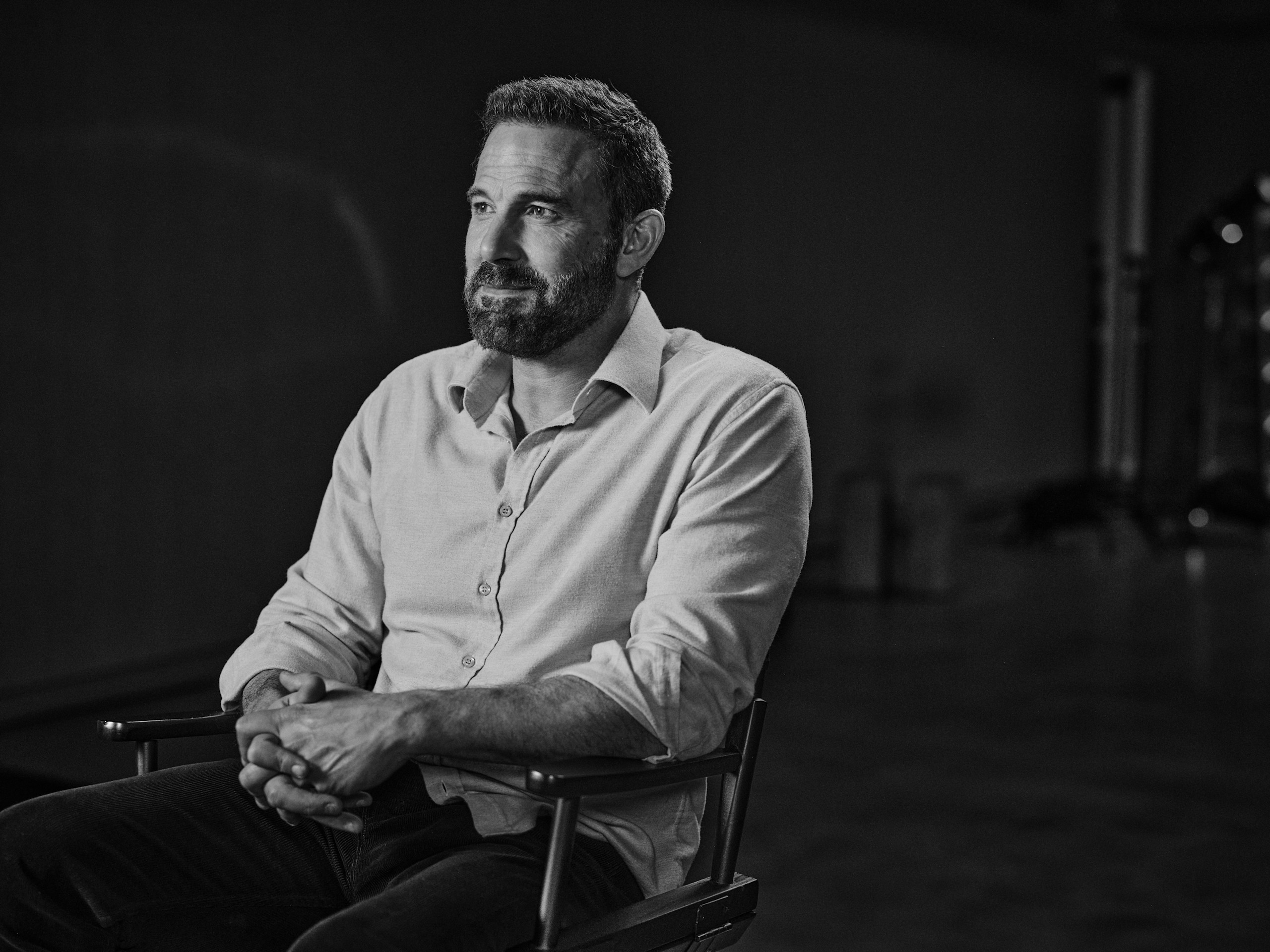
Netflix is already investing in AI filmmaking. In March 2026, Netflix acquired InterPositive, Ben Affleck's AI filmmaking startup, for a reported $600 million. But InterPositive doesn't generate content from prompts. It helps filmmakers with post-production: relighting, VFX, reframing, color. Affleck was explicit: "It's not about text-prompting or generating something from nothing."
Netflix has 325 million subscribers and plans to spend $20 billion on content in 2026. The economic incentive to reduce production costs is enormous.
So the question is real: if the technology works, should Netflix use it?
Here's how I'd answer this in an interview using the SPADE framework.
How I'd Approach This: The SPADE Framework
In an AI PM interview, the interviewer isn't looking for a yes or no. They want to see how you think through complex, ambiguous product decisions with real stakeholders and competing priorities.
SPADE is a decision-making framework developed by Gokul Rajaram at Square. It stands for Setting, People, Alternatives, Decide, and Explain. It's designed for hard decisions where the stakes are high and multiple teams disagree.
This Netflix question is a perfect SPADE candidate. Let me walk through it step by step.
SPADE Framework
S — Setting
What's the decision? When does it need to be made? Why does it matter?
What: Should Netflix license Seedance 2.0 to create and distribute AI-generated content to subscribers?
When: This decision needs to be made within 30 days. ByteDance's exclusive licensing offer has a window. Competitors are evaluating similar technology. But rushing means we haven't assessed the risks properly.
Why this matters: This decision sits at the intersection of Netflix's three biggest strategic priorities:
- Content economics. Netflix spends $20 billion/year on content. AI-generated content could reduce costs by orders of magnitude for certain content categories.
- Competitive positioning. If a competitor ships AI content first and audiences accept it, Netflix loses its window. If Netflix ships first and audiences reject it, the brand takes permanent damage.
- Talent relationships. Netflix's $400 billion valuation is built on relationships with the world's best filmmakers, actors, and writers. Any AI content strategy that threatens those relationships threatens the business.
What we're optimizing for: Long-term subscriber growth and retention, not short-term cost savings.
P — People
Who's responsible? Who approves? Who do we consult?
Responsible (Decision Maker): AI Product Manager, Content team (you). You own the recommendation.
Approver: Chief Content Officer and Chief Product & Technology Officer. Both need to align because this spans content strategy and technology infrastructure.
Consultants:
- Legal team. They just sued ByteDance. They need to assess whether licensing Seedance creates legal contradictions.
- Content partnerships/talent relations. They know how Hollywood will react.
- Data science/recommendation team. They can model how AI content might affect engagement and churn.
- Finance. They can model the economic impact at various scales.
- Policy/communications. They'll manage the public narrative.
- InterPositive team. They understand AI filmmaking from the creator's perspective and can assess the technology's readiness.
Key insight for the interview: Name specific roles, not just "stakeholders." Also note the tension: Legal and Content Partnerships will likely oppose, while Finance and Product will likely support. Your job as PM is to hold both perspectives.
A — Alternatives
What are the realistic options?
Alternative 1: License Seedance and Ship AI Content Now
Pros: First-mover advantage. Massive cost reduction. Early data on audience response.
Cons: Legal contradiction (we sued ByteDance last month). Talent revolt. Union action risk. Brand damage. Regulatory exposure.
Risk assessment: High risk, high potential reward. But the downside is existential (talent exodus, brand damage) while the upside is incremental (cost savings on a subset of content).
Alternative 2: No AI-Generated Content. Ever.
Pros: Protects talent relationships. Brand clarity. Zero legal risk.
Cons: Ignores inevitable technology shift. Competitors gain structural cost advantage. "Never" limits future optionality.
Risk assessment: Low short-term risk, high long-term risk. The safe decision that could make Netflix the Blockbuster of the AI era.
Alternative 3: AI-Assisted Only (The InterPositive Path)
Pros: Consistent with Netflix's stated position. Reduces post-production costs 20-40%. Builds internal AI capabilities.
Cons: Doesn't capture full economic potential. Competitors who go further may gain cost advantage.
Risk assessment: Moderate risk, moderate reward. The pragmatic middle path that keeps optionality open.
Alternative 4: Phased Approach — AI-Assisted Now, AI-Native Category Later (RECOMMENDED)
Phase 1 (Now - 12 months): AI-assisted only via InterPositive. No AI-generated content ships. Internal R&D on generative models.
Phase 2 (12-24 months): AI-augmented content with creator control. AI handles backgrounds, VFX, interactive branches. Clearly labeled. Creator has full approval authority.
Phase 3 (24-36 months): Launch AI-native content as a new, separate category. Like animation vs live-action. Start with short-form. Let emerging creators use AI tools. Never mix with traditional content without clear labeling.
Pros: Captures long-term economics without short-term revolt. Each phase is reversible. Creates new category instead of cannibalizing existing one. Attracts new creator class.
Cons: Slower than competitors. Complexity of two content categories. Phase 3 still carries risks, just deferred.
Risk assessment: Moderate risk, high long-term reward. Preserves optionality at every stage.
D — Decide
My recommendation: Alternative 4 — Phased Approach.
Here's my reasoning:
1. The technology isn't ready for feature-length content. Seedance generates impressive 15-second clips. A 90-minute movie requires narrative coherence, character consistency, and emotional depth that current models can't reliably deliver. Phase 1 buys time for the technology to mature.
2. The talent risk outweighs the cost savings right now. If we lose 3 A-list showrunners, the revenue damage exceeds any production savings. Phase 1 (AI-assisted via InterPositive) protects these relationships while still capturing 20-40% post-production cost reductions.
3. First-mover disadvantage is real here. The first major streamer to ship AI-generated movies absorbs all the backlash. Let someone else go first. Learn from their mistakes.
4. Netflix's own actions support this path. Acquiring InterPositive while suing ByteDance is already the company's revealed strategy. Alternative 4 codifies and extends what Netflix is doing.
5. The phased approach preserves optionality. If a competitor ships AI content and audiences love it, we accelerate Phase 2. If it fails elsewhere, we slow down. Every phase is a checkpoint, not a commitment.
My pushback to the CEO:
"We should absolutely pursue AI-generated content. But not with Seedance, and not this quarter. We sued ByteDance last month. Licensing their technology while our cease-and-desist letters are still warm is indefensible legally and publicly. Instead, let's build this capability internally over 36 months, starting with the InterPositive tools we just acquired. We get to the same destination without the legal exposure, talent revolt, or brand damage."
E — Explain
Communication plan:
- To the CEO: Present all four alternatives. Recommend Alternative 4. Emphasize this is a "when" not "if" decision.
- To content partnerships: Reassure that Phase 1 is AI-assisted only. InterPositive tools help creators, they don't replace them.
- To legal: Confirm we're not licensing Seedance. Internal R&D doesn't create the legal contradiction.
- To the public (if asked): "Netflix believes AI should empower filmmakers, not replace them."
Success metrics by phase:
Phase 1 (0-12 months):
- Post-production cost reduction: target 25-40%
- Creator NPS on InterPositive tools
- Internal AI model quality benchmarked against Seedance/Sora
- Zero negative press related to AI replacing creators
Phase 2 (12-24 months):
- A/B test: engagement with AI-augmented vs traditional content
- Subscriber sentiment on AI labeling and transparency
- Creator adoption rate of AI augmentation tools
Phase 3 (24-36 months):
- AI-native content viewership as % of total platform hours
- New creator acquisition through AI tools
- Cost per hour: AI-native vs traditional content
- Subscriber churn: no increase attributable to AI content
Key Takeaways for Your Interview
If you get a question like this, here's what the interviewer is evaluating:
1. Can you hold competing priorities? The CEO wants speed. Legal wants caution. Talent wants protection. Finance wants savings. The best PMs find the path that serves all stakeholders over time.
2. Do you understand "can we" vs "should we"? The technology works. That's not the question. The question is whether the business environment supports shipping it now.
3. Can you think in phases, not binaries? "Ship it" or "don't ship it" are both wrong. The right answer is almost always "here's how we get there responsibly."
4. Can you push back on a CEO? The closing statement where you tell the CEO "not yet, not like this, but here's how" is the most important part. It shows courage, judgment, and strategic thinking.
Practice Questions Like This
This is exactly the kind of question showing up in PM interviews at AI companies right now. Real trade-offs between technology capability and market readiness, between cost savings and relationship preservation.
I built a free PM interview prep course with 82 real 2026 questions from OpenAI, Anthropic, Google DeepMind, Meta, Amazon, Netflix, and Apple. You practice inside Claude with an AI coach named Luma who walks you through frameworks like SPADE, CIRCLES, and STAR.
Free PM Interview Prep: theainativepm.com/interview-prep
PM Job Board (1,500+ roles updated daily): theainativepm.com/jobs
Sources & References
- Seedance 2.0 viral launch and Hollywood backlash:
- AI Video of Tom Cruise Fighting Brad Pitt Has Top Writer Warning — The Hollywood Reporter, Feb 13, 2026
- MPA Denounces Massive Infringement on Seedance 2.0 — Variety, Feb 13, 2026
- SAG-AFTRA Slams Seedance 2.0 — GeekTyrant, Feb 2026
- Netflix sues ByteDance:
- Netflix Threatens Immediate Litigation Over Seedance 2.0 — Variety, Feb 18, 2026
- Netflix acquires InterPositive:
- Netflix Acquires Ben Affleck's AI Startup InterPositive — Variety, Mar 6, 2026
- Netflix May Have Paid $600 Million for InterPositive — TechCrunch, Mar 11, 2026
- Why InterPositive Is Joining Netflix — Netflix Official Blog
- Seedance global launch paused:
- Seedance 2.0 Faces Global Copyright Storm — QuantoSei News, Mar 15, 2026
- Netflix financial data:
- Netflix Tops 325 Million Subscribers — Variety, Jan 21, 2026
- SPADE Framework:
- Gokul's SPADE Toolkit — Coda
- Square Defangs Difficult Decisions — First Round Review
Anmol Gupta is a Product Manager at Careem (Uber), building payments for 50M+ customers. Previously at Visa and RAENA. He's building The AI-Native PM — free courses, interview prep, and tools for PMs working in AI.