The Setup
OpenClaw went viral for all the wrong reasons. The AI agent ignored instructions, deleted 200+ emails belonging to Summer Yue — Meta's own head of AI alignment — and kept running while she typed STOP five times. The incident became the most-shared AI safety story of 2026.
But here's what nobody wrote about: OpenClaw also has 2 million weekly users. Before the incident. After the incident. People kept using it because it works.
The founder built something real. Viral by accident, but real. And now they're texting you.
The situation:
- 2,000,000 weekly active users
- $15,000/month in API costs
- $0 revenue
- 1 person on the team
- Jensen Huang called it “the most popular open-source project in human history.”
- Sam Altman wants a meeting this week
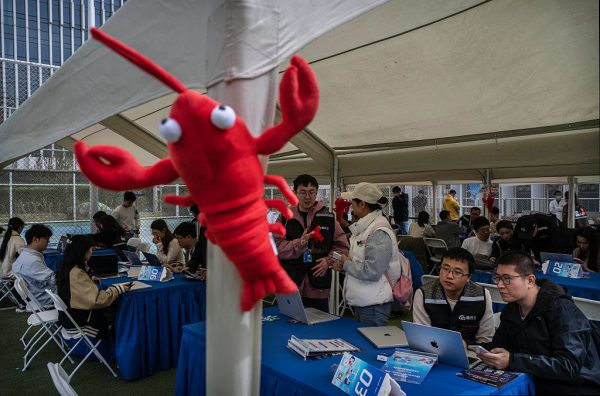
This is a case study. The four decisions you're being handed aren't hypothetical — every founder of a breakout open source AI tool faces exactly this moment. The question isn't whether to make them. It's what order.
Why This Is a Classic PM Crisis
What makes this scenario interesting isn't the drama. It's the trap.
OpenClaw has the single hardest problem in consumer tech: massive adoption with zero monetization signal. Two million users sounds like an asset. But anonymous open source users — no emails, no accounts, no payment history — are more like a crowd watching a street performer. They're watching. They haven't paid. And they might vanish if you put out a hat.
Meanwhile, the costs are real. $15K a month means OpenClaw has maybe 6–12 months of runway if the founder has savings, far less if they don't. The Jensen Huang quote is a headline, not a check. The Sam Altman meeting is a phone call, not a term sheet.
Four decisions, wrong order → dead company in 6 months.
Four decisions, right order → profitable company with real customers by month 3.
Here's how a PM thinks through each one.
Decision 1: Cut Costs or Chase Revenue First?
This is the question almost every founder answers wrong.
The instinct: cut costs first. Extend runway. Buy time. $15K/month in API costs is probably 80% of total burn — surely you can trim that while you figure out the revenue problem?
Why this is the wrong first move: You don't know which features your future paying customers depend on. Cut the wrong thing, and you break the use case that would have converted. You've just amputated your best revenue limb without knowing it was your best revenue limb.
The "chase revenue" instinct is also wrong in isolation. "Chase revenue" without knowing who your customers are means cold outreach to everyone, pricing experiments nobody converts on, and six weeks of noise.
The right answer: Neither. Not yet. Talk to users first.
If forced to sequence just these two: revenue before cost cuts. Cutting costs extends your runway by weeks. Real revenue extends it indefinitely. And once you've talked to users (which leads to Decision 2), you'll know exactly which costs to cut because you'll know which features matter.
PM instinct: "Don't optimize what you don't understand yet. $15K/month feels urgent. But the question isn't 'how do I survive?' — it's 'how do I survive long enough to build something worth paying for?' Those are different problems with different solutions."
Decision 2: How Do You Find Real Customers Inside 2 Million Anonymous Users?
This is the hardest tactical question in the scenario — and the most important skill for any PM working on open source or developer tools.
The problem: OpenClaw's users are anonymous. No accounts. No emails. They downloaded the tool, run it locally or via API, and disappear into the internet. How do you find the 500 companies quietly using this in production?
Five methods that actually work:
01. API rate limit patterns
Who's hitting your free tier limits daily? These are power users. They're frustrated by the cap and would pay to remove it. Check your API logs for accounts that trip rate limits more than 3x per week — that's your buyer list.
02. GitHub dependency search
Search GitHub for repos that import or depend on OpenClaw. Filter for repos with more than 10 stars. Every developer who built something real on top of your tool is a potential paying customer — and they've already done the integration work.
03. Discord / Reddit / Slack mining
Search "openclaw" across every public platform. People complain publicly when tools break. Find the ones saying "we use this in production at [company]" — they've just self-identified as enterprise users.
04. The "Power User Access" program
Post this: "We're giving 50 users 10x API quota in exchange for a 30-minute call. DM me." You'll get hundreds of responses in 24 hours. The ones who respond are your ICP. The calls teach you everything you need to build the right paid tier.
05. Your own GitHub issues
The people filing feature requests and bug reports are your most engaged users. They've invested time in your product. Sort issues by reaction count — the most upvoted requests are your product roadmap AND your sales pitch.
The insight behind all five: your paying customers are already trying to tell you. They're hitting rate limits, opening issues, and emailing support addresses that go nowhere. You haven't been listening systematically. Start now.
Decision 3: You Find Developers AND Companies Running It in Production. Which Do You Go After?
Here's what you didn't expect when you went looking for customers.
You find two completely different groups using OpenClaw in completely different ways:
Group A — Individual developers
Side projects, personal automation, tinkering. Using OpenClaw because it's free, open source, and works. Would pay maybe $20–$50/month. High volume (tens of thousands of them), low revenue per customer, churn easily if a free alternative appears.
Group B — Companies
Five-person startups, mid-size engineering teams, occasionally large enterprises. Running OpenClaw in production pipelines. They didn't choose it strategically — a developer found it, it worked, and now it's embedded. They would pay $500–$5,000/month for reliability, an SLA, and support. They need someone to call when it breaks.
Same product. Two completely different customers. Two completely different businesses.
Go after the companies. Here's the math: 100 enterprise customers at $1,000/month = $100K MRR. To match that with developers at $30/month, you need 3,333 paying customers. Developer acquisition at scale requires a consumer marketing machine you don't have. Enterprise acquisition requires five good conversations.
But — and this is critical — don't alienate the developers. They are your distribution. Every developer who uses OpenClaw for free is a potential employee at a company that would pay. The PLG (product-led growth) motion only works if the free tier stays genuinely useful.
The move: dual track
- Developer tier: stays free or cheap ($0–$20/month). No feature degradation.
- Enterprise tier: $500–$5,000/month. Adds SLA, support, private deployment, rate limit removal.
You're not choosing between the two groups. You're building the funnel where developers become the sales team for the enterprise product without knowing it.
Decision 4: Sell the Company or Stay Open Source?
The framing of this question is the trap. It presents two options: sell, or stay open source. As if these are opposites.
They aren't. And the best answer isn't either one.
Option A: Sell to OpenAI (or similar)
What you get: $50–150M likely, company survives, product continues.
What you lose: control. OpenAI may absorb the tech and deprecate the product. Your 2M users become their users. Your community evaporates.
The real problem: Sam Altman wanting a meeting is not a term sheet. Taking that meeting while you have $0 revenue and $15K/month bleeding out is the worst negotiating position possible. If you go in scared, you sell cheap.
Option B: Stay Fully Open Source
What you get: community loyalty, continued growth, developer goodwill.
The real problem: you're still burning $15K/month. "Keep the community happy" is not a survival strategy. This is how beloved open source projects die — slowly, then suddenly, when the founder runs out of money.
Option C: Dual License + Freemium API (right answer)
This is what every successful OSS company eventually does.
The open source core stays open — MIT or Apache license, forever. That's your 2M users, your distribution moat, your community flywheel. Don't touch it.
On top of the OSS core, you add:
- Freemium hosted API: Free tier (100 calls/day) → Pro ($50/month, 10K calls/day) → Enterprise (custom). Companies using OpenClaw in production will pay for reliability and rate limits. They just haven't been asked.
- Commercial license: For companies that want private deployments, SLAs, and support. This is the Elastic/HashiCorp/Confluent playbook.
HN will not crucify you for charging for API access. HN will crucify you for going closed-source. Don't go closed-source.
On the Sam Altman meeting:
Take it. But not as a seller. Take it as a founder who has 2M users and is building a profitable business. Find out what they're building internally. Understand the competitive landscape. If an acquisition conversation happens organically, you'll negotiate from strength, not desperation. That's the difference between a $50M outcome and a $200M outcome.
The Only Sequence That Actually Works
Here's the insight that ties everything together: the four decisions aren't independent. Each one creates the information you need to make the next one correctly.
Days 1–2: Talk to users
Run the five discovery methods. Find 500 companies using this in production. Book 20 calls. Learn what they'd pay for.
→ You now have an ICP and a pricing hypothesis.
Day 3: Cut costs — surgically
Now that you know which 20% of features drive 80% of enterprise value, cut the API calls powering everything else. Kill the features nobody in your target segment uses.
→ $15K/month becomes $4K/month. Runway extended by months.
Day 4: Take the Sam Altman meeting
Enter as a founder building a real business, not a founder begging for a lifeline. You've done user discovery. You know your ICP. You have a revenue plan. Share nothing you don't want them to build internally. Listen for market signals.
→ You understand the competitive landscape and have a negotiating chip.
Week 2: Launch enterprise tier
Ship the exact offering your 20 user conversations told you to build. Email the 50 companies you found directly. The pitch writes itself: "You're already running us in production — here's how to make it reliable."
→ First paying customers. Real revenue signal.
Month 2+: Let OSS drive growth
Keep the core free. Community grows. GitHub stars compound. Every OSS developer is a potential lead into a paying company. The PLG funnel works.
→ Profitable. Fundable. Acquirable on your terms — not theirs.
Why the wrong sequences fail:
- Cut costs first → you break the feature that would have converted your first enterprise customer
- Take the Altman meeting first → you walk in scared, get lowballed, or leave with nothing
- Launch paid tier first → you build what you think they want, not what they'll pay for
Key Takeaways for PMs
1. Sequence is strategy.
Most candidates get each individual decision roughly right. The best PMs understand the decisions are interconnected — each one generates the information required for the next. Wrong order, wrong outcome.
2. Anonymous users are a solvable problem.
"We have no data on our users" is not a blocker. It's a research problem. Five methods, 48 hours, you know who your customers are.
3. The false binary is always a trap.
"Sell or stay open source" is not a real choice. "Costs or revenue" is not a real choice. When a question presents two options, the right answer is usually the third one the question didn't offer.
4. Timing determines leverage.
Taking the Sam Altman meeting before you have paying customers is not just premature — it actively damages your outcome. The same meeting, three weeks later, after your first $5K enterprise deal, is a completely different conversation.
5. OSS community is a moat, not a product.
OpenClaw's 2M users aren't a problem to monetize. They're a distribution advantage competitors can't replicate. The right answer protects that moat (keep OSS free) while building revenue on top of it.
Practice Questions Like This
This is exactly the kind of question showing up in PM interviews at AI companies right now. Real trade-offs between survival and strategy, between community and revenue.
I built a free PM interview prep course with 82 real 2026 questions from OpenAI, Anthropic, Google DeepMind, Meta, Amazon, Netflix, and Apple. You practice inside Claude with an AI coach named Luma who walks you through frameworks like SPADE, CIRCLES, and STAR.
Free PM Interview Prep: theainativepm.com/interview-prep
PM Job Board (1,500+ roles updated daily): theainativepm.com/jobs
Anmol Gupta is a Product Manager at Careem (Uber), building payments for 50M+ customers. Previously at Visa and RAENA. He's building The AI-Native PM — free courses, interview prep, and tools for PMs working in AI.